The Three Replacement Methods
Sewer line replacement in Massachusetts has three primary methods, each suited to specific conditions:
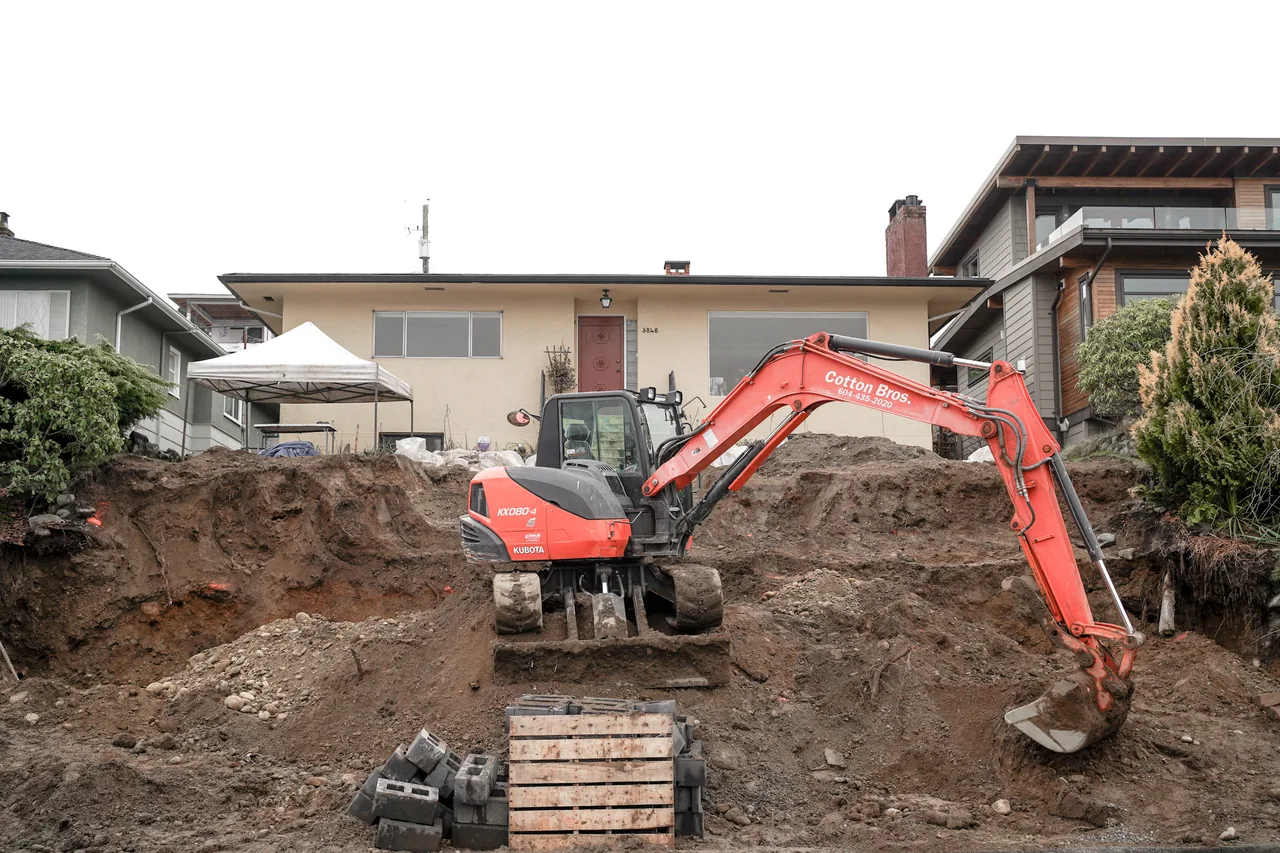
- Open-cut traditional excavation — $120-$280 per linear foot
- Excavator digs a trench from house to street, exposing the entire sewer line. Old pipe removed, new PVC schedule 40 (4" or 6") laid to grade, backfilled, surface restored. Most disruptive method but works in every condition.
- Trenchless pipe bursting — $160-$320 per linear foot
- Bursting head pulled through existing line via hydraulic winch, fragmenting old pipe outward while pulling new HDPE pipe in behind. Two access pits (one at house cleanout, one at street/main connection) — minimal yard disruption. Requires existing line to be straight (no 90° bends) and not collapsed.
- CIPP cured-in-place lining — $110-$240 per linear foot
- Resin-saturated felt liner inverted into existing pipe via air or water pressure, cured in place via hot water or UV light, creating a new pipe inside the old. Cheapest method when conditions allow. Requires existing pipe to retain structural integrity (cracked but not collapsed; no complete blockages).
The decision among methods is technical — driven by camera inspection findings, not by homeowner preference. Pro Build's typical recommendation order: CIPP first if conditions allow (cheapest, fastest), pipe bursting second (less disruptive than open-cut), open-cut as fallback when other methods aren't viable.
Why Camera Inspection Comes First
No competent MA plumber will quote a sewer replacement without a camera inspection of the existing line. The inspection identifies:
- Existing pipe material: Cast iron (1900-1980 in MA) lasts 50-75 years before failing at joints. Orangeburg (1945-1972) is bituminous fiber pipe that fails in 30-50 years and is essentially never repairable. PVC (1980+) lasts 50+ years and is rarely the failed pipe — usually tied to a separated joint.
- Failure type: Joint separation, pipe collapse, root invasion, belly (low spot holding water), offset (misaligned joint).
- Failure location: Per cleanout-to-main distance. Critical for choosing replacement method.
- Pipe condition along the run: Whether failure is isolated (spot repair option) or systemic (full replacement only path).
- Depth and routing: Critical for accessing trenchless equipment.
Camera inspection cost: $385-$680 in MA. Often credited toward the replacement project if you proceed with the same contractor. Pro Build's camera inspection includes a recorded video file for the homeowner's records.
What Causes MA Sewer Line Failure
Three failure modes dominate MA residential sewer line failures:
- Tree root invasion (40-50% of failures)
- Maple, willow, oak, and ash roots seek moisture and find sewer line joints (pipe joints leak microscopically; roots find the moisture and grow into the joint). Camera inspection shows roots inside the line. Treatment options: hydro-jetting + root foaming (temporary, 18-30 month effectiveness) or pipe replacement (permanent).
- Pipe joint separation / belly (25-30% of failures)
- Cast iron and clay pipe joints fail as ground settling shifts pipe alignment. Sewage backs up at the offset joint. Common in MA homes built on glacial till or fill soil (much of Greater Boston).
- Collapsed Orangeburg pipe (15-20% of failures, declining)
- Orangeburg installed 1945-1972 routinely fails by simply collapsing inward as the bitumen-impregnated wood fiber degrades. No repair possible — full replacement only. As of 2026, most Orangeburg has already failed; remaining installations are working past expected lifespan.
MA-Specific Conditions That Inflate Cost
Three Massachusetts-specific conditions push sewer replacement costs above national averages:
- Boston historic district excavation restrictions. Beacon Hill, Back Bay, North End, Charlestown have brick sidewalk and cobblestone street restoration requirements that triple per-foot restoration costs. A 75-foot open-cut sewer in Beacon Hill can run $32,000-$48,000 (vs $9,000-$21,000 in suburban Newton).
- MWRA sewer connection requirements. Massachusetts Water Resources Authority (Boston, Brookline, Newton, Cambridge, Chelsea, Quincy, Somerville, and 35 other municipalities) requires connection inspection by an MWRA-certified plumber. Adds permit fee + inspection coordination. Mandatory for any sewer line work tied to the MWRA system.
- Frost depth excavation: MA frost depth is 48 inches per IRC R403.1.4.1. Sewer lines in MA must be installed below frost line OR insulated. Many older MA sewer lines run shallower than current code; replacement to code requires deeper trench, more excavation, more backfill — adding $40-$80 per linear foot vs national baseline.
The Method Decision Framework
Once camera inspection is complete, the method decision usually falls out of these conditions:
Sewer Replacement Method — Decision
- Existing pipe is fully collapsed OR has multiple 90° bends: Open-cut traditional excavation. Trenchless options can't navigate.
- Existing pipe is structurally sound (cracked but not collapsed) AND straight run: CIPP lining. Cheapest method, minimal disruption.
- Existing pipe is failing (root invasion, joint separation, partial collapse) AND straight or single-bend run AND yard has mature landscaping or hardscape: Pipe bursting. Preserves yard at acceptable cost premium over open-cut.
- Existing pipe is failing AND yard is open AND distance to main is <40 ft AND depth is <5 ft: Open-cut traditional. Cheapest method when disruption is acceptable.
- Boston historic district OR MWRA requires special permit conditions: Pipe bursting or CIPP almost always required to avoid prohibitive surface restoration costs.
Frequently Asked Questions
How long does a sewer line replacement take in MA?
Will my homeowner's insurance cover sewer line replacement?
Who's responsible for the sewer line in MA — homeowner or city?
Can tree roots be removed without replacing the sewer line?
What's the difference between Orangeburg and cast-iron sewer pipe?
Do I need a permit to replace my sewer line in MA?
How deep does my sewer line need to be in Massachusetts?
Can I dig my own sewer line replacement to save money?
References & Sources
- 248 CMR — Massachusetts Plumbing and Fuel Gas Code. https://www.mass.gov/regulations/248-CMR-massachusetts-plumbing-and-fuel-gas-code
- Massachusetts Water Resources Authority — connection requirements. https://www.mwra.com/
- International Plumbing Code 2021 — Sewers and Drains. https://codes.iccsafe.org/content/IPC2021
- NASSCO — Pipeline Assessment & Certification Program. https://nassco.org/