What the HEA Actually Is (and Isn't)
The Mass Save Home Energy Assessment is a free 90-minute on-site inspection conducted by a Mass Save authorized contractor (typically a third-party BPI-certified energy auditor — Sealed Air, ICF, Honeywell, or a regional firm). It's funded by Massachusetts utility ratepayers via the energy efficiency surcharge on every electric and gas bill.
The visit produces three things:
- An on-site installation of free LED bulbs, low-flow showerheads, smart power strips, and (in many cases) an Energy Star smart thermostat.
- A written report identifying air-sealing opportunities, insulation gaps, and equipment upgrade paths — with rebate amounts pre-calculated.
- A signed authorization form that unlocks every downstream Mass Save rebate (heat pump, HPWH, insulation install, panel upgrade) for the next 2 years.
The HEA does not:
- Inspect structural conditions (rot, foundation, framing).
- Inspect for asbestos, lead paint, or radon (separate inspections required).
- Inspect electrical for code compliance (only flags knob-and-tube as an air-sealing barrier).
- Quote you on equipment — that comes from a separate authorized contractor like Pro Build.
The 23-Item Inspection Sequence
Below is the complete inspection sequence in the order the auditor will walk it. Items 1-8 are envelope; 9-14 are HVAC and DHW; 15-20 are electrical loads and lighting; 21-23 are documentation and rebate authorization.
- 1. Front door and primary entry seal
- Weatherstripping integrity, threshold sweep, door bottom seal. Free upgrade kit installed on visit if needed.
- 2. Window air sealing (interior)
- Sash gaps, frame caulk integrity, storm window presence. Caulk and rope-foam upgrade noted for follow-up insulation contractor visit.
- 3. Attic hatch / pull-down stair seal
- The single largest air-sealing opportunity in most MA homes. Auditor measures gap size and recommends rigid foam + weatherstripping upgrade.
- 4. Recessed light fixtures (kitchen, hallways)
- Each non-IC-rated recessed light leaks ~10 CFM at 50 Pa pressure. Auditor counts and recommends air-tight covers (~$45 per fixture, fully rebated).
- 5. Bathroom exhaust fan vent termination
- Verifies fan vents to exterior (not into attic — code violation that causes attic moisture and ice dams). Flagged for plumbing/HVAC corrective.
- 6. Plumbing and electrical wall penetrations
- Top-plate penetrations into attic (chases, plumbing stacks, electrical runs). Foam sealing recommended; install fully rebated under air sealing.
- 7. Rim joist / sill plate (basement perimeter)
- The second-largest air-sealing opportunity. Foam board + spray foam recommended; ~$1,800-$2,800 installation, 75-100% rebated.
- 8. Existing insulation depth/type (attic, walls, basement)
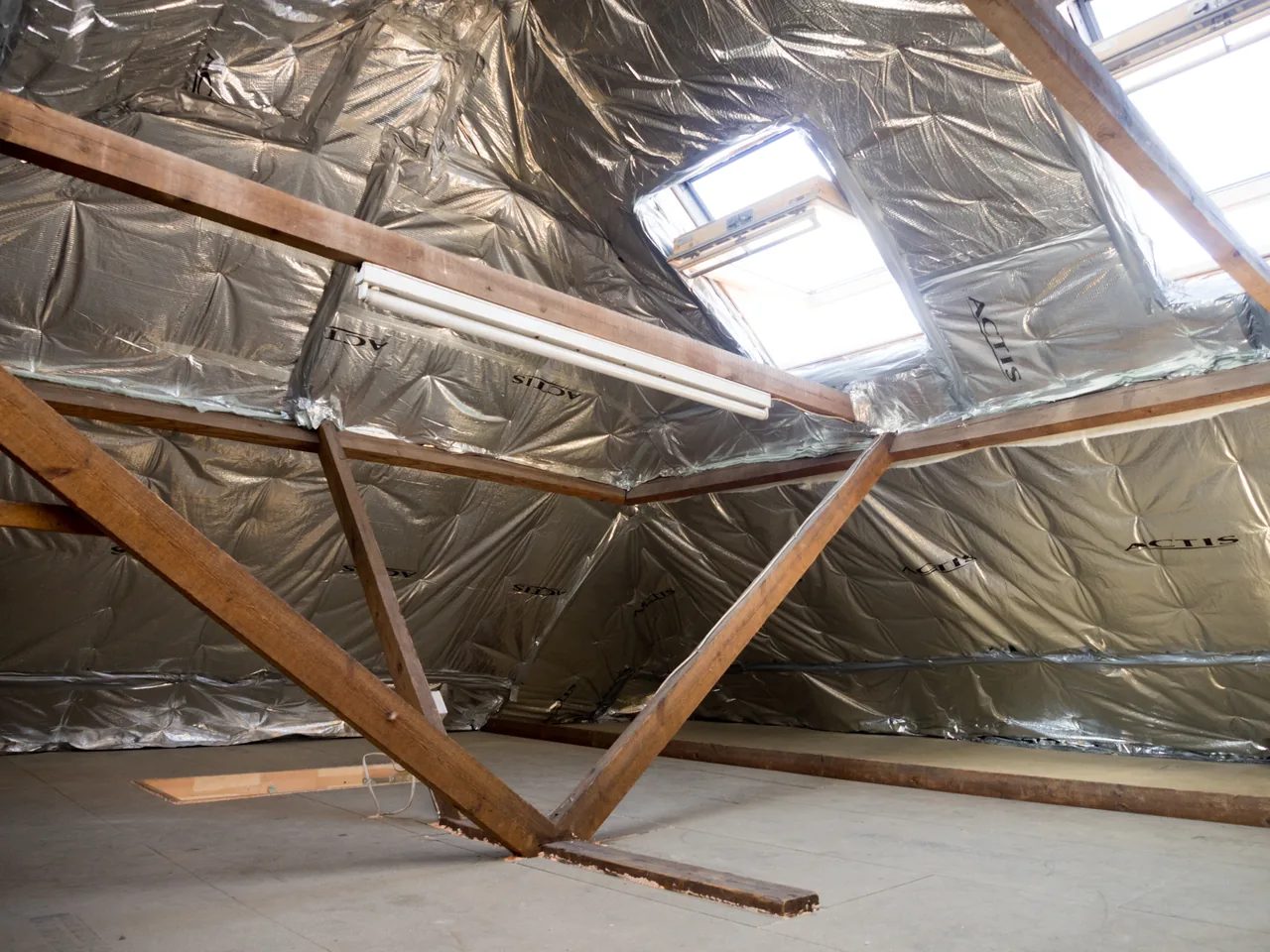
- Auditor measures with a ruler in 3 attic locations; identifies type (fiberglass, cellulose, foam) and inches present. R-value calculated against current MA stretch code R-49 attic / R-21 wall target.
- 9. Heating system age, fuel, model
- Records nameplate AFUE/HSPF rating, age, last service date. If oil/propane and >12 years old, flagged as heat pump conversion candidate ($10K rebate path).
- 10. Cooling system age, refrigerant, model
- Records similar data. Refrigerant type matters: R-22 systems are flagged as end-of-life (R-22 phased out 2020).
- 11. Domestic hot water (DHW) heater
- Tank age, fuel, gallons. Heat Pump Water Heater rebate path identified ($750-$1,500 standard, up to $2,250 income-eligible enhanced).
- 12. Thermostat type and setpoint
- Free Energy Star smart thermostat installed if existing is mechanical or non-programmable. Eversource and National Grid offer ongoing $50/yr enrollment incentive.
- 13. Ductwork sealing / insulation
- Visible duct sections in unconditioned space (basement, attic) inspected for joints and insulation. Rebated under "duct sealing" line item.
- 14. Combustion safety test (gas/oil only)
- CO measurement at all combustion appliances per BPI safety protocol. Failed test = mandatory remediation before any other work proceeds.
- 15. Refrigerator and freezer count + model
- Secondary refrigerator/freezer in basement or garage flagged for $50 rebated removal (free pickup + recycling).
- 16. LED bulb count and rating
- Auditor installs free LED replacements for any incandescent or CFL fixtures encountered.
- 17. Showerheads and faucet aerators
- Free low-flow swap (1.5 GPM showerheads, 1.0 GPM aerators).
- 18. Smart power strips (entertainment center, home office)
- Auditor installs 1-2 free smart power strips for parasitic load reduction.
- 19. Visible knob-and-tube wiring
- Knob-and-tube can't be insulated over per code (heat dissipation requirement). Flagged as knob-and-tube removal prerequisite before attic insulation upgrade.
- 20. Blower door test (optional but typical)
- Calibrated fan installed in front door, depressurizes home to 50 Pa. Result reported in CFM50; calibrates the air-sealing rebate amount.
- 21. Income tier verification (income-eligible enhanced path)
- Auditor offers documentation review for income-eligible enhanced tier. Households at or below 80% of state median income qualify for 100% rebate on insulation and air sealing, plus enhanced heat pump and HPWH tier amounts.
- 22. Rebate authorization signature
- Homeowner signs authorization that allows downstream Mass Save authorized contractors (insulation installer, heat pump installer, HPWH installer) to file rebates without a separate HEA visit for 2 years.
- 23. Written report and recommended next steps
- Auditor delivers (within 7-10 days) a written report with prioritized action items, rebate amounts, and 3 contractor recommendations per scope. Homeowner is under no obligation to use the recommended contractors.
The Income-Eligible Enhanced Tier Path
The single most-missed rebate is the income-eligible enhanced tier — and the reason it's missed is that it requires the HEA to surface it before any contractor quotes work.
Income-eligible enhanced means household income at or below 80% of the Massachusetts state median income. For 2026, that translates to roughly:
- Single-person household: $55,000
- Two-person: $72,000
- Three-person: $87,000
- Four-person: $104,000
- Five-person: $117,000
At this tier, the rebate stack changes substantially:
- Air sealing
- 100% rebated (standard tier: 75%)
- Attic / wall / basement insulation
- 100% rebated (standard tier: 75%)
- Heat pump (whole-home)
- Up to $16,000 (standard tier: $10,000)
- Heat pump water heater
- Up to $2,250 (standard tier: $750-$1,500)
For a typical 2,200 sq ft MA home, the difference between income-eligible enhanced and standard tier on a full electrification project is roughly $8,000-$11,000 in additional rebate. The HEA auditor can verify income tier on the spot if the homeowner has tax return or pay stub documentation available — it's a 5-minute task that triggers thousands in additional rebate downstream.
What to Have Ready Before the Auditor Arrives
The HEA is faster (and the report is more accurate) when the homeowner has these items ready at the door:
- Last 12 months of utility bills (gas, electric, oil if applicable). Eversource and National Grid customers can pull these from the online portal.
- Equipment nameplate photos: heating system, cooling system, water heater, panel. Auditor will photograph everything but having serial numbers ready speeds the visit.
- Attic and basement access cleared of stored items. Auditor needs to physically walk the space.
- Income documentation (most recent tax return cover page or 2 most recent pay stubs) if pursuing income-eligible enhanced tier verification.
- Pets secured in another room. Blower door test creates strong air movement that startles animals.
What Happens After the Visit
The on-site portion of the HEA finishes in 90 minutes. The downstream sequence is where most homeowners drop off, leaving rebates unclaimed:
- Day 7-10: Written report arrives by email. Review for accuracy of insulation R-values and equipment age.
- Day 14-30: Insulation contractor (typically the auditor's firm or a partner installer) provides a no-cost-to-you scope of work and rebate filing. The work itself is scheduled for the next 4-8 weeks.
- Days 30-90: Insulation install + air sealing completed. Mass Save inspector returns for post-install verification (~30 minutes).
- Day 90+: Heat pump quote, HPWH quote, panel upgrade quote pursued separately with authorized contractors. Each filing references the original HEA date.
For the full rebate stack walkthrough beyond the HEA, see our Mass Save rebate stack decision tree article covering the path to $24K+ in stacked rebates.
Frequently Asked Questions
How long does the Mass Save Home Energy Assessment take?
Is the Mass Save HEA actually free?
Who qualifies for the Mass Save HEA?
Can I do the HEA more than once?
What's the difference between a Mass Save HEA and a comprehensive energy audit?
Does the auditor inspect for asbestos or lead paint?
Can I install Mass Save rebated insulation myself and still get the rebate?
How long are Mass Save rebates valid after the HEA?
References & Sources
- Mass Save Home Energy Assessment program details. https://www.masssave.com/saving/home-energy-assessments
- Building Performance Institute (BPI) standards. https://www.bpi.org/standards
- Massachusetts state median income data (2026). https://www.mass.gov/info-details/income-eligible-information
- U.S. Department of Energy — Air Sealing Your Home. https://www.energy.gov/energysaver/air-sealing-your-home