Why Ice Dams Form
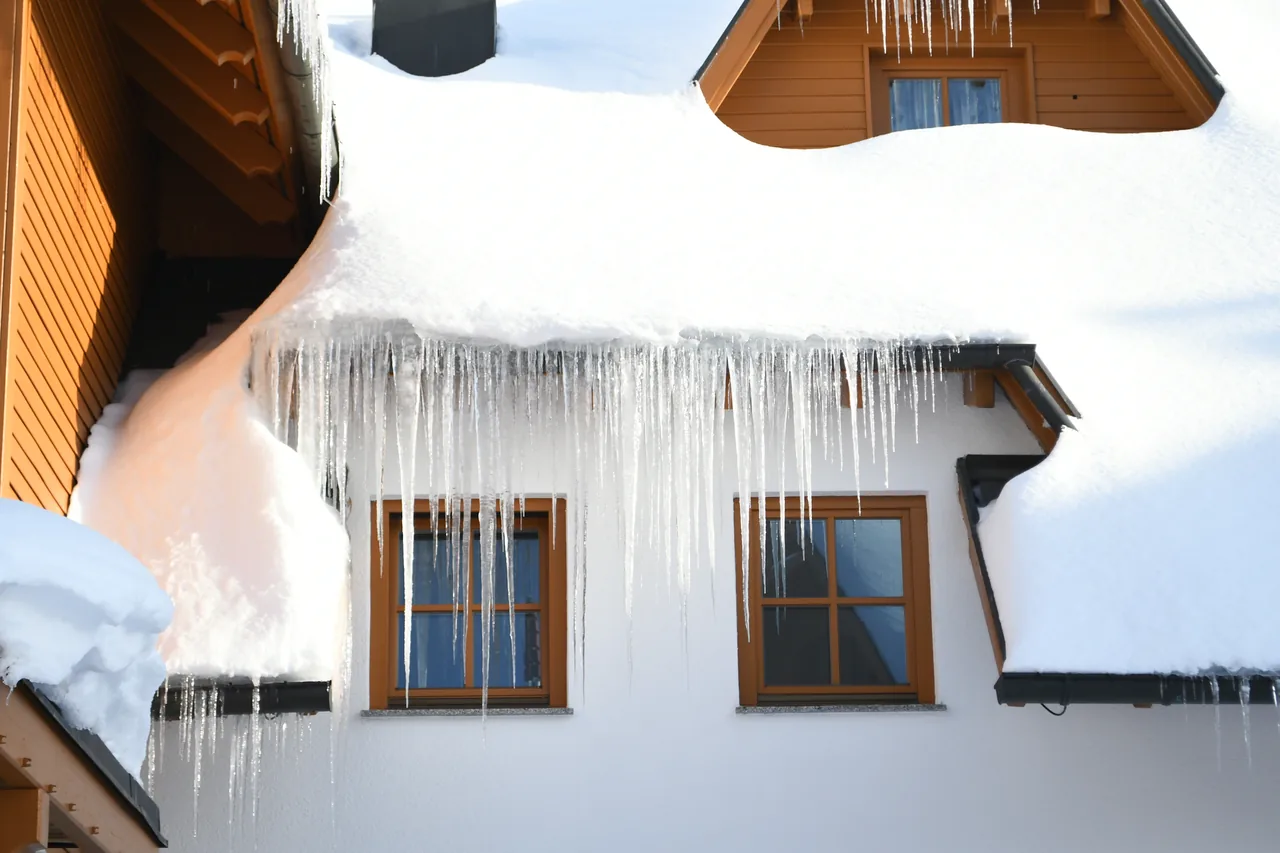
Three temperatures matter: the air outside (cold), the snow on your roof (in between), and the roof deck under the snow (warmer than the snow). When the deck is warmer, snow melts where it touches the deck, runs down to the eave, and refreezes where the eave overhangs the un-heated soffit. That refreezing is the ice dam. The dam grows uphill until meltwater backs up under your shingles and finds a nail hole, a flashing seam, or an unsealed valley.
If your deck didn't run warmer than the snow, you wouldn't have a dam. That's the whole story.
Why Removal Alone Fails
Steam removal melts the dam back. Then the heat from your attic builds the dam again the next time it snows. You've paid $400–$1,200 per visit to remove a symptom while the cause sits untouched in the attic. Worse, repeated steam removal abrades the asphalt shingle granules at the eave — your roof ages faster because you're paying to clear ice.
Removal has exactly one legitimate use: emergency, when water is already inside the house and you need to stop the meltwater right now while you schedule the real fix. Pro Build offers emergency ice dam removal when that's the situation. Otherwise the budget belongs upstairs.
The Real Fix: Three Things, In Order
1. Air sealing the attic floor
The biggest source of attic heat is air leakage from the conditioned space — light fixtures, top plates, wire penetrations, attic hatches. Until those are sealed, insulation alone won't keep the deck cold. Air sealing is Mass Save eligible at typically 75% off retail cost.
2. Insulation upgrade to R-60
Massachusetts code (780 CMR Energy) targets R-49 in attics; the Specialized Stretch Code pushes new construction to R-60. Most pre-1990 MA attics measure between R-19 and R-30. Topping up to R-60 with blown cellulose or fiberglass is Mass Save eligible at 75–100% off for income-eligible homeowners.
3. Ice-and-water shield at the eaves
Even on a properly insulated roof, MA code (780 CMR R905.1.2) requires ice-and-water shield from the eave to 24 inches inside the warm wall. On older roofs, this membrane is missing or degraded. When you re-roof, this is the moment to upgrade. Roof replacement with proper ice-and-water shield costs more upfront but eliminates the failure mode.
What It Costs
Out-of-pocket, after Mass Save:
- Air sealing: $300–$900 net (was $1,200–$3,500 retail).
- Attic insulation top-up to R-60: $400–$1,500 net (was $1,800–$5,500).
- Ice-and-water shield (replacement only): $1,200–$2,500 added to a re-roof.
Compare to a single steam removal at $400–$1,200 — and you keep paying every winter.
"If you fix the deck temperature, the dam stops forming. If you only remove the dam, you're paying rent on a problem you could own outright."
Next Steps
Want a free attic + air-sealing audit with the Mass Save rebate calc?
Related: roof leak repair, roof inspection, free Mass Save Home Energy Assessment.
Quick FAQs
- How fast can ice dam removal damage my shingles?
- One steam visit is generally fine. Three or more in the same area accelerates granule loss visibly within 2–3 seasons.
- Will heat cables solve the problem?
- No. Heat cables prevent dam buildup at the eave but don't address the underlying attic heat loss. They're a higher-recurring-cost band-aid (electricity all winter) compared to a one-time insulation + air-seal upgrade.
- Does insurance cover ice dam damage?
- MA homeowner policies typically cover the interior water damage but not the roof. Most insurers will increasingly question repeat claims — fixing the attic is the long-term protection.